Teaching and Learning

At Paddington Academy, teaching and learning sits at the heart of our mission to ensure that every student is well-educated, has the opportunity to attend university, and is able to lead a happy and fulfilled life. We believe that every student is entitled to an education that enables them to become knowledgeable, think critically and independently, and develop the understanding they need to succeed. Through a rich and ambitious curriculum, students build the knowledge, skills and confidence that allow them to achieve highly and thrive in the future. Through excellent teaching and an ambitious curriculum, we help students achieve their full potential and bring out the best in everyone.

Excellent teaching brings this curriculum to life. Across the academy, teachers work together to make lessons ambitious, carefully planned and responsive to students’ needs. Our aim is simple: to ensure that all students learn more, remember more and achieve highly.

Why do we believe knowledge is powerful?

We believe that knowledge is powerful because it helps students understand the world around them. In lessons, students encounter the ideas, events, concepts, texts, people, places and discoveries that have shaped society.

Through carefully planned teaching, they are encouraged to think deeply, ask thoughtful questions and engage confidently with the world beyond school.

At Paddington, we are ambitious about what students should learn and how they learn it. Lessons are designed to help students build secure subject knowledge over time, develop important vocabulary and make meaningful connections between new learning and what they already know.

As students participate in lessons, practise their understanding and revisit key ideas, they grow in confidence. This enables them to contribute to academic discussion, communicate with precision, access future study and feel empowered as citizens.

How do we structure lessons to enable students to learn effectively?

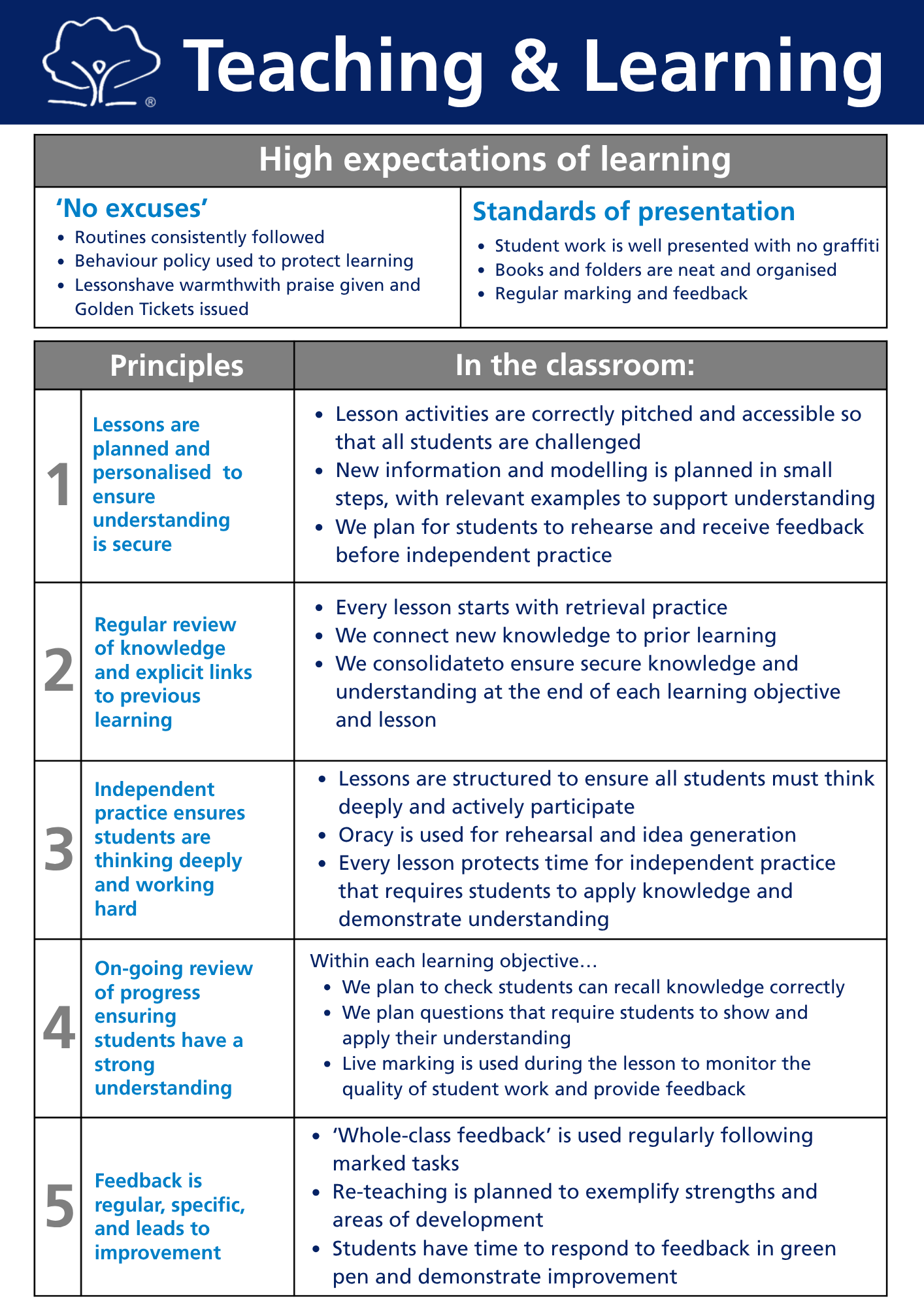
Lessons at Paddington are designed to help students understand, practise and remember important knowledge. Our 100-minute lessons give students the time to think deeply, engage fully with new ideas and complete extended independent practice. Teachers think carefully about what students need to know, what they already know and how new learning should be introduced.

New content is broken down clearly so that students can build understanding step by step. Teachers explain ideas carefully, model high-quality work and give students opportunities to rehearse, practise and apply what they have learned. Lessons also help students revisit important knowledge over time so that it becomes secure.

We know that students learn best when they are challenged and supported. Teachers use their knowledge of the curriculum, their classes and individual students’ starting points to plan lessons that are ambitious, accessible and purposeful. This includes thinking carefully about how students with additional needs can access the curriculum and achieve success.

What does excellent teaching look like at Paddington?

Excellent teaching at Paddington is built on high expectations, strong subject knowledge and careful planning. Teachers invest time in understanding the curriculum, developing their subject expertise and considering how students will learn the most important content.

Careful lesson planning is an important part of excellent teaching. Teachers think deliberately about what students need to learn, how new knowledge connects to previous learning and how lessons can support all learners to succeed. Lessons are designed with a clear sense of purpose so that students understand what they are learning, why it matters and how it fits within the wider curriculum journey.

In the classroom, excellent teaching is clear, precise and responsive. Teachers explain new ideas, ask questions, check understanding and adapt where needed. They support students to practise successfully before expecting them to work with greater independence.

We want students to be active participants in their learning. This means listening carefully, answering questions, discussing ideas, completing high-quality work and taking pride in presentation. Our classrooms are calm, purposeful and ambitious because students learn best when expectations are clear and learning time is protected.
Why is feedback important?

Feedback is central to learning at Paddington Academy. We want students to understand that feedback is not simply about correcting mistakes. It is about knowing what has been successful, understanding what needs to improve and taking the next step with confidence.

Teachers provide feedback in a range of ways during lessons and through students’ written work. This may include questioning, live feedback, whole-class feedback, modelling, re-teaching and opportunities for students to improve their responses.

Students are expected to engage carefully with feedback and use it to strengthen their knowledge, understanding and written work. Our belief is simple: feedback makes us better.

How do lessons support literacy and communication?

We believe that every teacher is a teacher of literacy. Students need strong reading, writing, speaking and vocabulary skills to succeed in every subject and in life beyond school.

Across the curriculum, teachers support students to read challenging texts, understand important vocabulary and communicate their ideas clearly. Students are taught to speak and write with increasing confidence, fluency and accuracy.

Teachers think about meaningful opportunities to develop students’ oracy through discussion, questioning and purposeful classroom talk. Lessons also provide opportunities for students to strengthen their communication skills through extended writing and the use of subject-specific vocabulary. We want students to express themselves clearly and think like subject experts.

How do we ensure teachers develop?

Great teaching is developed over time. At Paddington Academy, we believe that all teachers, regardless of experience, continue to refine and improve their practice.

Staff have regular opportunities to engage in professional development, work collaboratively on curriculum planning and reflect on the quality of teaching and learning.

Teachers attend Curriculum Masterclasses to develop their subject knowledge, strengthen their understanding of how students learn and become increasingly precise in the way they explain, question, model and give feedback.

This culture of professional improvement helps ensure that teaching is never left to chance. It allows our staff to keep getting better, so that our students benefit from excellent teaching across the academy.

United Learning Hub

United Learning comprises: United Learning Ltd (Registered in England No: 00018582. Charity No. 313999) UCST (Registered in England No: 2780748. Charity No. 1016538) and ULT (Registered in England No. 4439859. An Exempt Charity). Companies limited by guarantee.
Registered address: United Learning, Worldwide House, Thorpe Wood, Peterborough, PE3 6SB.

Financial Accountability and Freedom of Information

United Learning